Regular irrigation system maintenance keeps an automatic watering system reliable and efficient. Blocked emitters, misaligned sprinkler heads or hidden leaks can waste water and leave parts of the garden too dry or too wet. A seasonal routine helps prevent small faults becoming expensive repairs.
Irrigation maintenance through the year
|
Season |
Homeowner checks |
Professional support |
|
Spring |
Test zones, sprinklers, drip lines, filters and controller |
Recommissioning, leaks, valves and pressure faults |
|
Summer |
Check coverage, clean emitters and adjust watering times |
Failed zones or hidden leaks |
|
Autumn |
Reduce watering and inspect exposed parts |
Winterisation and safe draining |
Spring irrigation system startup
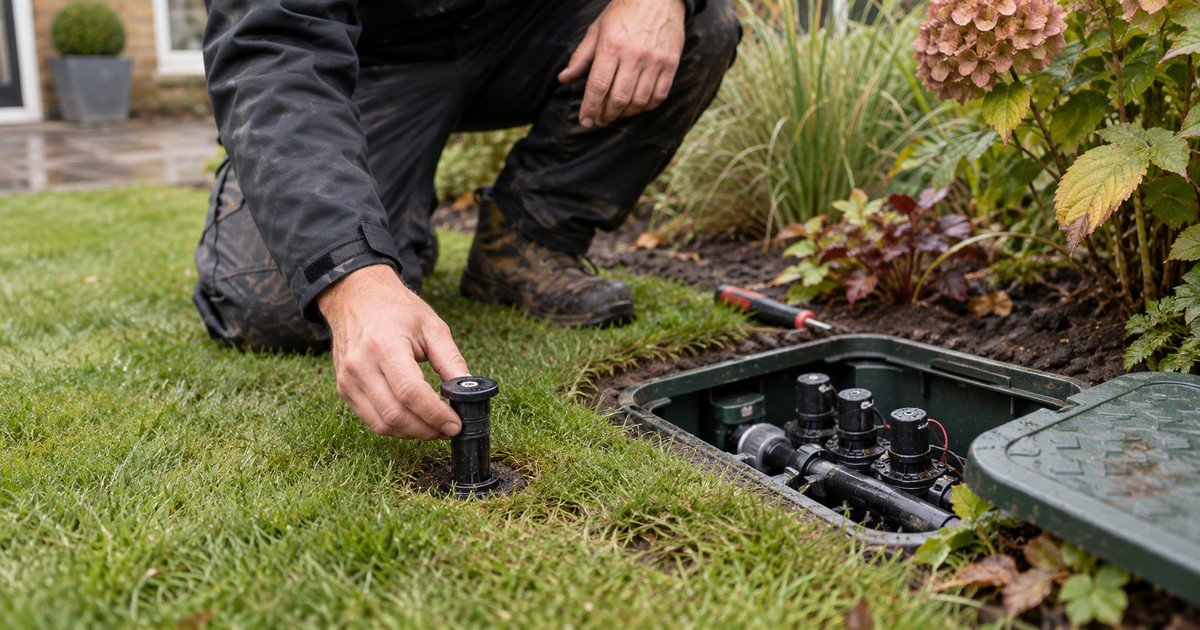
Run each zone separately and look for blocked nozzles, damaged sprinkler heads, leaking joints and uneven coverage. Review programmes too: mature planting, shade and lawn conditions may mean last year’s settings are no longer right.
The Gardener’s Rain provides seasonal irrigation system maintenance, including spring testing and recommissioning.
What can you safely check yourself?
Routine garden irrigation maintenance can include:
- checking whether sprinkler heads rise and retract correctly;
- clearing visible debris from nozzles and drip emitters;
- watching for unusually wet patches;
- checking filters and controller programmes;
- making sure water reaches planting rather than paths or patios.
If a zone stops working, pressure changes suddenly, valves malfunction or buried pipework is leaking, professional irrigation system repair and irrigation leak detection are usually the better option.
Summer sprinkler system maintenance
During the main watering season, watch the garden rather than relying only on the controller. Dry patches may mean poor coverage; pooling water can indicate excessive runtime, damage or pressure problems.
Autumn irrigation system winterisation
Water left in vulnerable pipework, valves or exposed components can freeze and expand. Proper irrigation system winterisation reduces frost risk and makes spring recommissioning easier, especially in complex automatic systems.
FAQ
How often should an irrigation system be serviced?
For most UK residential systems, two professional visits a year are a sensible baseline: autumn winterisation and spring recommissioning.
The Gardener’s Rain has a bi-annual subscription to provide these services.
Can I maintain my irrigation system myself?
You can perform visual checks, clean accessible emitters and review controller settings. Pumps, valves, buried leaks and pressure faults are best handled by a specialist.
What are common signs that repair is needed?
Low pressure, failed zones, constantly wet areas, uneven watering or damaged sprinkler heads are common warning signs.
Keep your system ready for every season
Good automatic irrigation system maintenance is preventative. Regular checks help reduce wasted water, protect the garden and extend system life. To arrange seasonal servicing or request a tailored quote, book an irrigation survey or service visit.