

Irrigation is a way of watering plants using a controlled supply of water. In a garden, that usually means keeping lawns, borders, hedges, pots, and new planting alive and growing steadily through dry spells, windy weeks, or just busy periods when hand-watering slips.
Simple, practical answers on how irrigation works, what a garden system actually does, and why it’s better than a hose. If you want a straightforward starting point for a new garden, this post will help.
What is irrigation in a garden and why use it?
Even when the forecast looks “fine”, gardens can still dry out fast. Wind, sun, free-draining soil, raised beds, and containers all push moisture out of the root zone quicker than most people expect.
Irrigation is basically your way to replace missing water with the right amount, at the right place, at the right time.
For homes, irrigation is often used for:
- lawns that need even coverage
- shrub and flower beds where hand-watering never reaches the roots properly or takes long time
- planters and pots that dry out in a day
- new turf and new planting that needs consistent moisture for settling
If you’re doing landscaping, it also helps to plan early. Running pipes under paving or lawns is much easier before surfaces go down or turf is laid.
UK gardens might look wet, but plants need water at the roots, not just a high annual average. A few breezy days can parch soil and raised beds faster than you’d expect, and rain often fails to soak deep enough.
How does irrigation work in practice?
People often picture “sprinklers on a timer”, but a modern setup can be more precise than that.
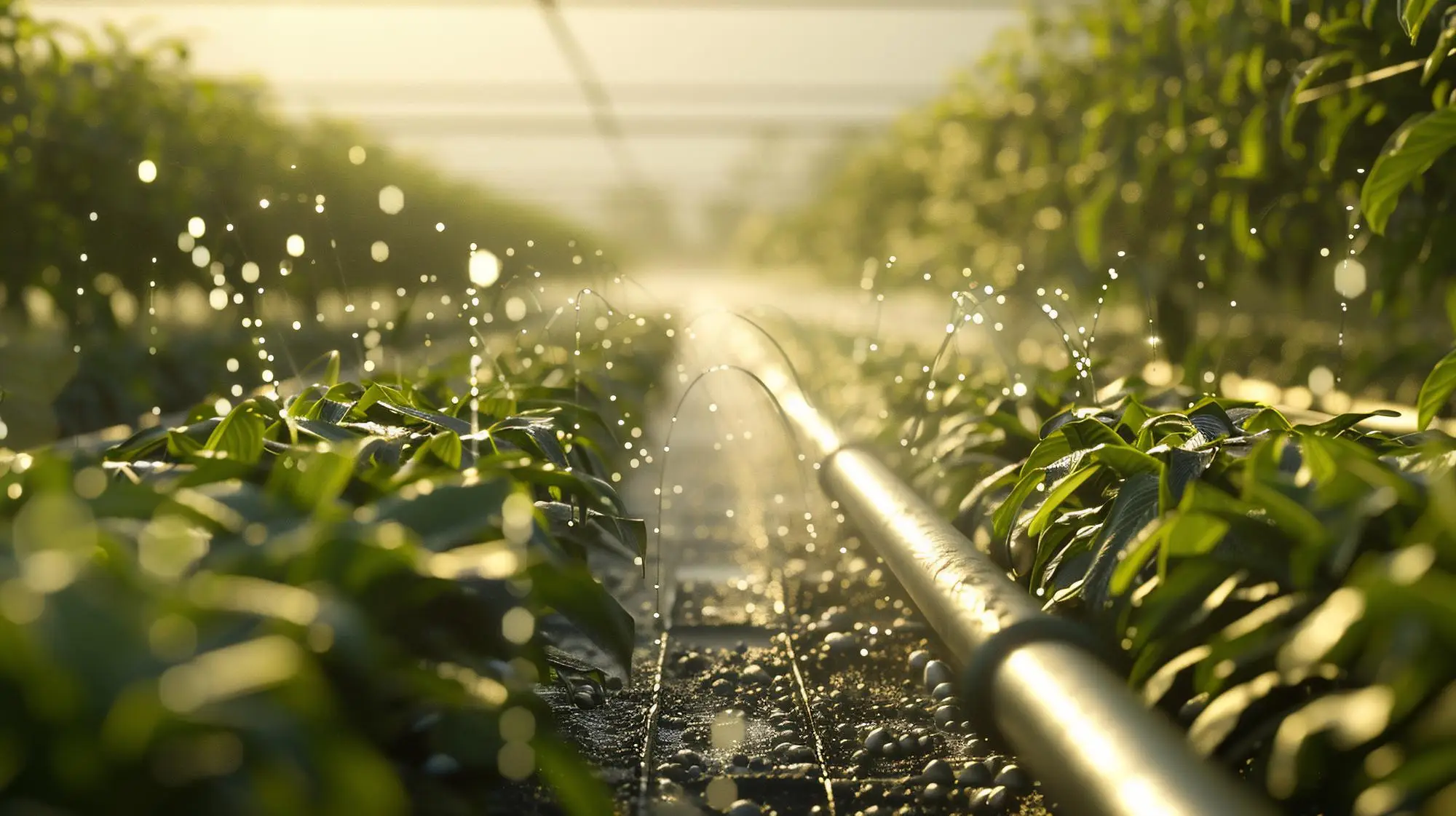
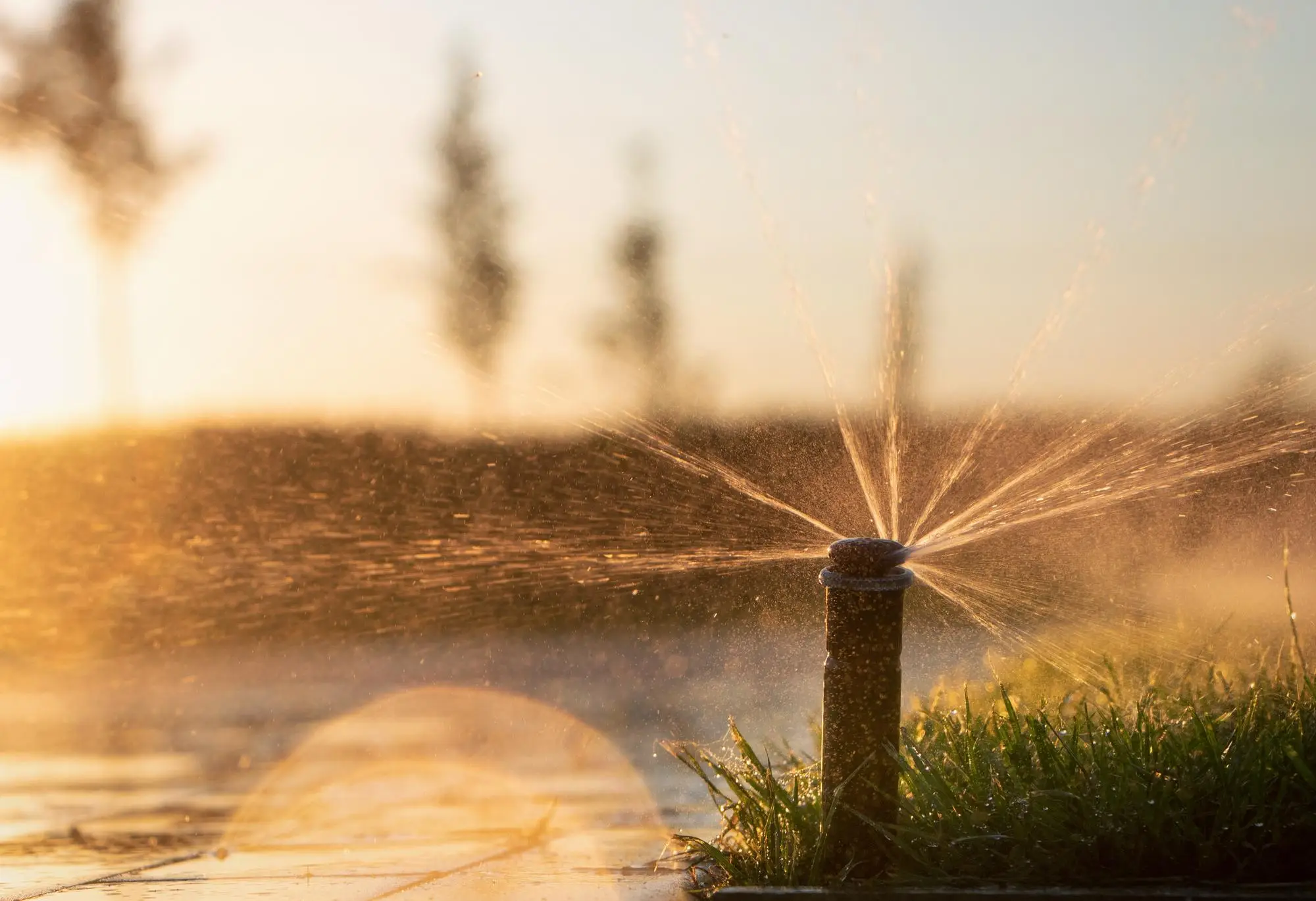
Water comes from your supply (most often a tank and pump, the mains at special circumstances), then it’s directed through an underground pipe network. Valves open and close to water different areas in “zones”, and the water is delivered through the right outlets: pop-up sprinklers for lawn, dripline for beds, micro-sprays for borders, bubblers for trees, and so on.
A typical system includes:
- Backflow protection (so irrigation water can’t flow back into the mains)
- Controller/timer (the “brain” that runs schedules)
- Valves and valve box (each valve usually controls one zone)
- Pipes and fittings (buried supply lines)
- Emitters (sprinkler heads, dripline, micro-sprays, bubblers)
- Optional: web forecast / rain sensor / soil moisture sensor
Done well, it’s quiet and mostly invisible. You see pop-ups only when they’re running, and dripline sits under mulch or alongside plants.
What types are common in gardens?
- Pop-up sprinklers for lawns (even coverage when designed properly)
- Drip irrigation/dripline for borders, hedges, raised beds, vegetable beds
- Micro-sprays for mixed planting and awkward shapes
- Bubblers for trees and larger shrubs
- Soaker hoses (DIY-friendly kits, less precise than true dripline)
What does an irrigation system do that hand-watering doesn’t?
Consistency. Most plant problems linked to watering come from the same pattern: too much water on some days, nothing for a week, then a panic soak that runs off the surface.
A well-designed system can:
- keep moisture steady at root level, which is what plants actually use
- reduce waste by watering targeted zones with the right amount instead of blasting everything
- free up time without guessing how long to water
- help new turf and new planting establish more reliably
If you’ve ever watered “until it looks wet” and still had plants wilt the next day, that’s usually because the water never soaked deep enough to reach the main roots.
Quick FAQs
How does irrigation work if my garden has different areas?
By splitting the garden into zones (lawn, beds, pots, hedges), then running each zone with the right emitter type and schedule.
What is irrigation system compared to a simple hose timer?
A full system is usually plumbed in with underground pipework, valves, and zones, so it can water the whole garden evenly without moving anything around.
What does irrigation system do during wet weather?
With a rain sensor or smart scheduling, the system can skip watering when conditions don’t need it. This helps avoid waterlogging and wasted water.
Make irrigation simple (and suited to your garden)
If you’ve been asking what irrigation is because your lawn browns off, your borders dry out, or you’re tired of dragging hoses around, an irrigation plan is often the cleanest fix. Start with the basics: what needs watering, how often, and whether a sprinkler, dripline, or mixed setup suits your space.
If you want a professional design and installation route, The Gardener’s Rain offers survey, design, and quoting for automatic garden irrigation systems across Bedfordshire, Hertfordshire, North London, Cambridgeshire and surrounding areas, with online booking available.
Book a survey visit here.