

If you’ve ever Googled “what is drip irrigation”, you’re not alone. People usually mean drip irrigation: a way to water plants slowly at soil level, right where roots need it. Here you’ll see what drip irrigation is, what drip irrigation systems include, whether they work in UK conditions, and when it makes sense to get a pro to fit one.
What is drip irrigation, exactly?
Drip irrigation delivers water in small, steady drops through tubing, so the soil stays evenly moist without soaking the whole garden. Instead of spraying water into the air (and losing some to wind and evaporation), it feeds water close to the roots. Drip or trickle systems are handy for fruit and veg plots, because you’re wetting the root zone rather than everything around it.
What is drip irrigation made of?
Water flows from an outdoor tap or water butt, passes through regulators, then travels through a main line and out through emitters (drippers).
A typical setup includes:
- A filter (helps stop grit blocking drippers)
- A pressure regulator (many drippers need low, steady pressure)
- Mainline tubing (brings water to beds and pots)
- Dripline or emitters (release water slowly)
- Optional timer or smart controller (waters early morning, even when you’re away)
This can look tidy when lines are pinned neatly and tucked under mulch.
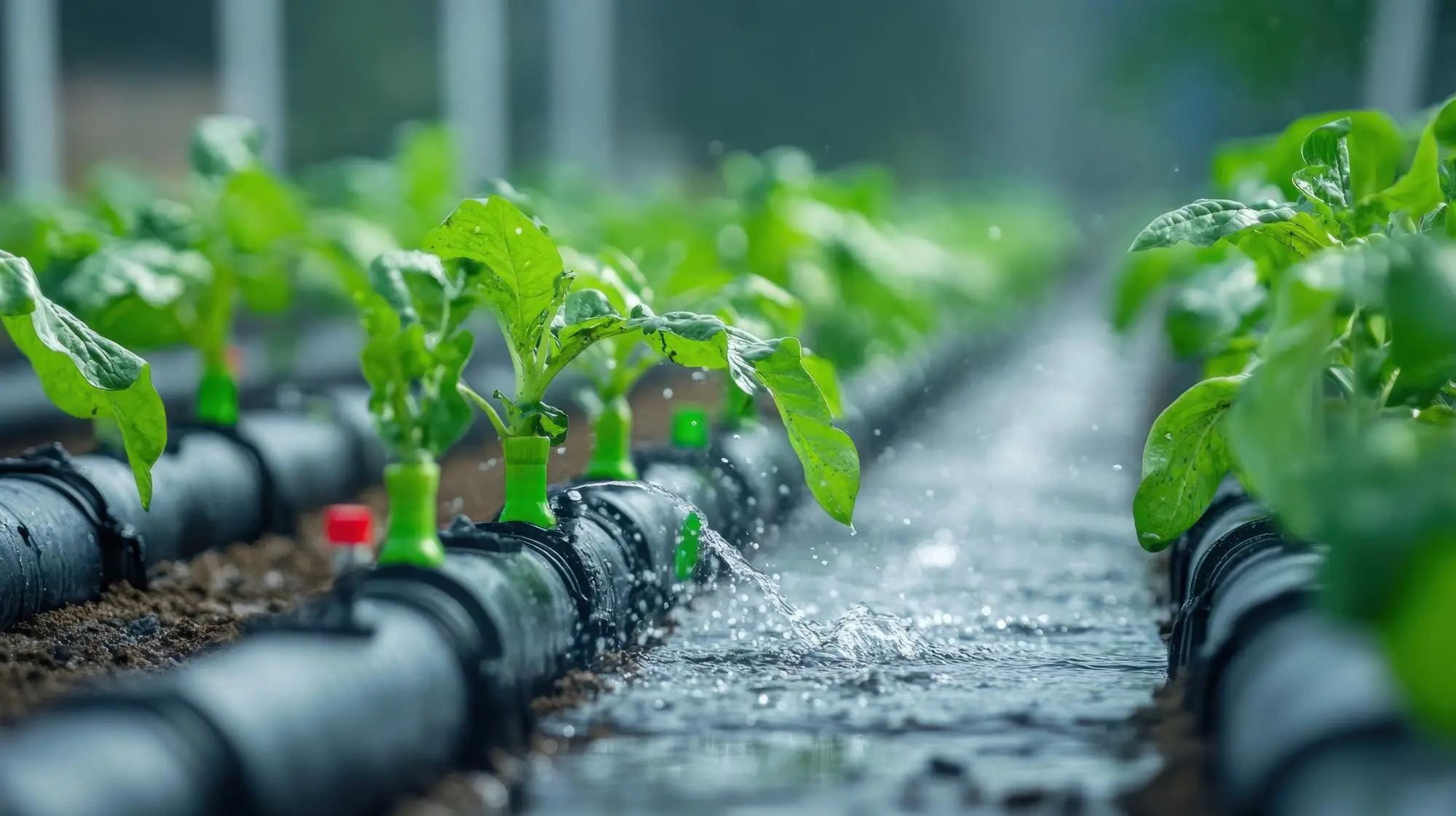
What is drip irrigation like in UK weather: do drip irrigation systems work?
They can, as long as the run time fits your soil and planting. On clay-heavy soil, slower flow and longer gaps help avoid puddling. In very free-draining soil, shorter, more frequent cycles can keep roots happy. For pots and planters, micro-tubing with individual drippers stops one container drying out while another gets flooded.
A simple check: after a run, dig a small hole 10 to 15 cm deep near a plant. If the soil is moist at that level, you’re in the right zone. If it’s dry, extend the run time or add an emitter. If it’s soggy, cut back.
Are drip irrigation systems good for gardens?
For many properties, yes. Well-controlled drip irrigation a water-saving approach in gardens.
Benefits you’ll notice:
- Less water wasted
- More consistent moisture for vegetables and new plantings
- Fewer weeds between plants, since bare soil stays drier
- Lower risk of fungal issues compared with overhead sprinklers
The main downside is maintenance. Drippers can clog if water isn’t filtered, and lines need a quick check at the start of each season. You’ll also get better results when the layout is designed around plant needs, not just “one line everywhere”.
What is drip irrigation best used for?
Targeted watering. It shines in raised beds, shrub borders, greenhouses, and pots on patios or balconies. If you mainly have a large open lawn, drip isn’t usually the first choice.
Learn more in our guide to water regulations compliance.
Want drip irrigation installed?
If you’d like help choosing parts, planning zones, or hiding lines neatly, have a look at our drip irrigation installation service. We can also fold irrigation into regular maintenance across Bedfordshire, Hertfordshire, North London, Cambridgeshire and surrounding areas.