Rainwater harvesting is one of the most practical ways to reduce mains water use in the garden while making irrigation more sustainable. For homeowners, it can mean lower watering costs, better resilience in dry periods, and a smarter use of water that would otherwise run off the roof and into drains. When planned properly, rainwater harvesting for irrigation can be as simple as a water butt or as advanced as a pumped storage system linked to an automatic irrigation setup.
What is rain water harvesting?
Put simply, rainwater harvesting means collecting rainwater, usually from a roof, storing it, and reusing it later. In domestic gardens, this stored water is commonly used for beds, borders, pots and lawns.
How does rain water harvesting work?
A typical system collects water from gutters and downpipes, passes it through basic filtration, and stores it in a butt, tank or underground container. From there, the water can be used manually with a watering can, or delivered through a pump into an irrigation system.
Benefits of rainwater harvesting
The benefits of rainwater harvesting go beyond saving water:
- reduces dependence on mains supply
- helps lower irrigation running costs
- supports more sustainable garden maintenance
- can reduce runoff from roofs and hard surfaces
- provides a useful water source during drier spells
For irrigation in particular, this matters because gardens often need the most water exactly when supply pressures are highest. RHS guidance also connects rainwater reuse with lower carbon impact because less treated mains water is needed.
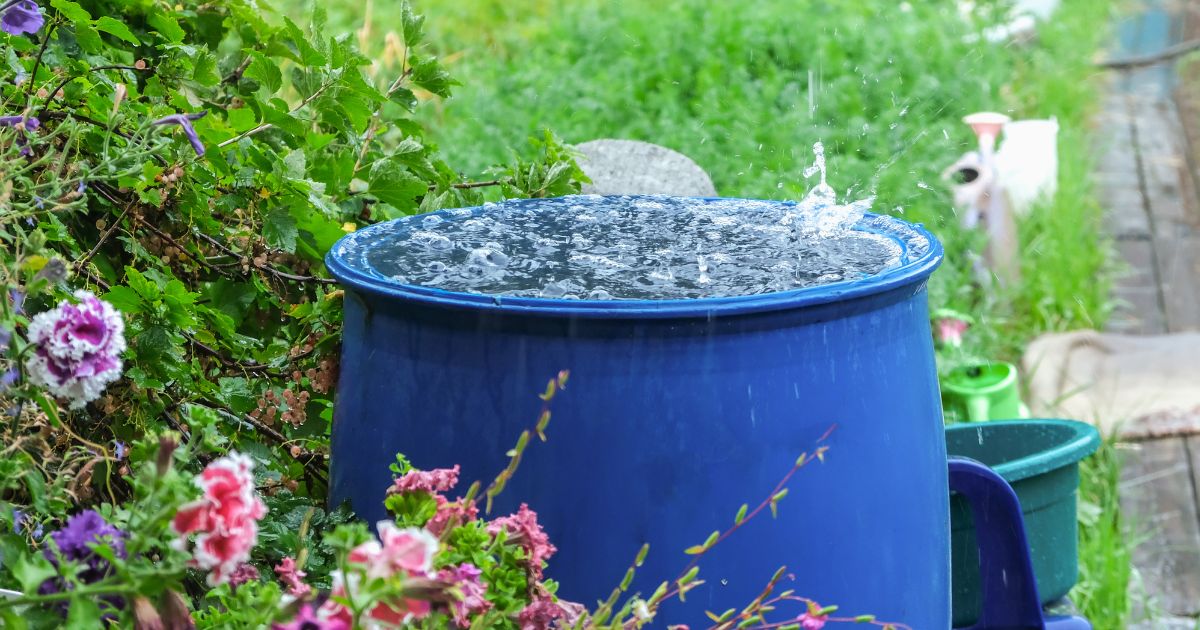
What is the advantage of rain water harvesting for irrigation?
The biggest advantage of rainwater harvesting for irrigation is flexibility. A small garden with pots and borders may only need a simple butt. A larger landscape, lawn or planted scheme may benefit from a storage tank and pump feeding drip lines or sprinklers.
As a rule of thumb:
- Water butt: suitable for light manual watering
- Larger tank: useful when irrigation demand is regular
- Tank plus pump: best when connecting stored water to an automated system
This system-based approach is where planning matters. If you are adapting an existing property, our guide to Retrofit Rain Harvesting: Evaluating The Costs And Challenges explains why storage space, pipe routes and demand calculations should be considered early. For a wider view of supply options, see Water Sources for Irrigation Systems.
Rainwater harvesting for irrigation: when to upgrade
If you only water occasionally, a basic setup is often enough. But if you want dependable irrigation across a larger garden, a designed solution is usually the better long-term choice. That may include filtered storage, a pump, controls and integration with a wider system. For UK gardeners, this fits well with broader sustainable drainage thinking, which increasingly values measures that slow runoff and reuse water on site.
If you are considering a tailored setup, explore our Irrigation Services or contact us for practical advice.
Summary
Rainwater harvesting is not just an eco-friendly idea. It is a practical irrigation resource. A simple water butt can work well for smaller needs, while a tank-and-pump system can support a more advanced garden irrigation setup. The right solution depends on roof area, storage capacity, planting needs and how automated you want the system to be.
Request expert advice or a quote for irrigation and rainwater harvesting solutions tailored to your garden.