

How to Winterize Irrigation System
If you’re wondering how to winterize irrigation system before the first hard freeze, the goal is simple: get water out so it can’t expand and crack pipes, valves, or sprinkler heads. This guide is for homeowners and facility managers who want a clear plan for fall shutdown and a smooth spring restart. In short: drain what you can, blow out what you can’t, and call a service when the setup is risky.
Why winterizing matters (and when to book a service)
Water left in lines can freeze, expand, and break fittings underground. A small crack in autumn can turn into a big leak in spring. If your system has a backflow preventer, complex manifolds, or you’re unsure where the main shutoff is, it’s often safer to use a professional blowout service. You can reach us via the Contact page, or check seasonal options on our Services page.
How to drain an irrigation system
Start with the basics:
- Shut off the irrigation water supply.
- Turn off the controller (or set it to “Rain/Off”).
- Open manual drain valves or the lowest drain point if your system has them.
- Let water run out until it stops.
Tip: Don’t forget above-ground parts like quick couplers and exposed filters.
How to drain drip irrigation system for winter
Drip lines need extra care because water can sit in emitters and filters. After shutting off the supply:
- Remove and drain the filter bowl (if installed).
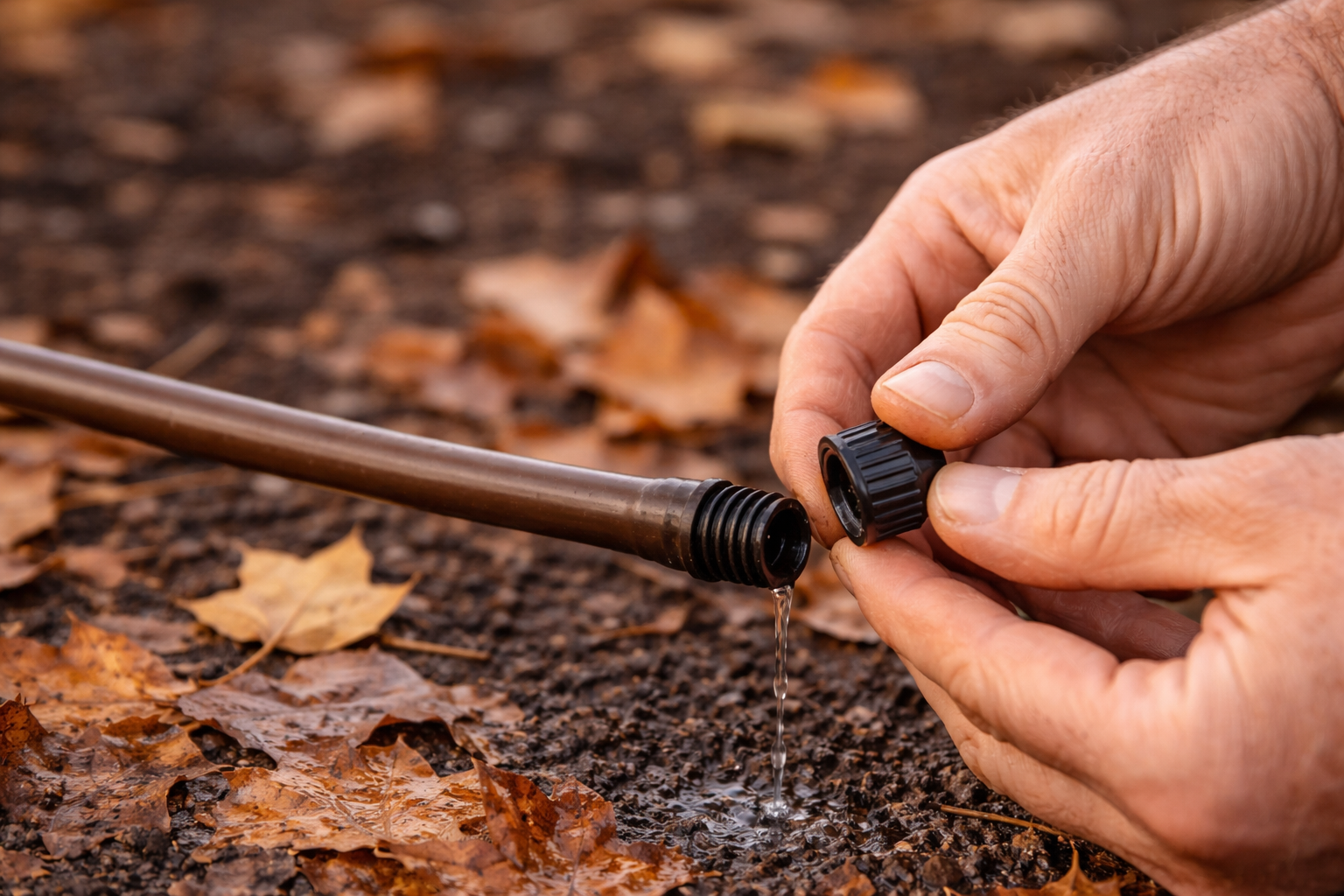
- Open end caps/flush valves on drip lines to empty them.
- Store removable timers, pressure regulators, and filters indoors when possible.
How to blow out an irrigation system
Draining helps, but many systems still hold water in low spots. That’s where compressed air comes in. Use regulated air pressure and blow out one zone at a time. Common homeowner mistakes are using too much pressure or trying to blow through the entire system in one go.
A practical sequence looks like this:
- Connect air at the proper blowout point (often after the backflow device).
- Set the controller to manual and run Zone 1 for a short cycle.
- Stop when you see mist (not a hard stream), then move to the next zone.
- Repeat until each zone is cleared.
If you’re not sure about the correct connection point or pressure limits, book a blowout service to avoid damaging fittings and seals.
How to turn on an irrigation system (spring start)
Spring startup is the other half of the story. How to turn on an irrigation system without surprises:
- Reinstall any filters/timers you stored.
- Open the main shutoff slowly to prevent water hammer.
- Check the backflow device and valves for leaks.
- Run each zone and adjust heads for coverage.
If you notice soggy spots, low pressure, or a zone that won’t close, it’s a good moment to use the Services or Contact pages above and have the system checked before peak season.
Next step: If you want a worry-free shutdown and restart, ask for a seasonal visit through our page. We’ll help you winterize safely and get your watering back on track in spring.