A professional irrigation installation should fit the way you use your garden, not simply add sprinklers wherever they will fit. From the first survey to the final handover, a good installer will explain what is planned, what work will take place and how to operate the finished system.
Whether you are preparing a new landscape or upgrading an established garden, knowing the garden irrigation installation process can make the project feel more straightforward.
1. The irrigation installation survey
The process usually begins with a conversation about your priorities: which areas need watering, what planting or lawn you have, and whether the garden is being redesigned.
You have to discuss the available water source and – if it’s advantageous and possible – seek alternative sources like borehole or live water access.
During an irrigation installation survey, the installer can measure the garden dimensions, elevation and, where needed, check the available water pressure and flow.
Besides learning your demands, it’s important to mark planted areas with different water requirements, wet or extremely dry spots, sunny and shady areas, and areas surrounded by matured trees, tall hedges or any other plants that can suck the water away from others.
A garden plan, landscaping drawings or a simple sketch can help. It is also useful to point out any known underground services and areas where you would prefer to avoid digging.
You may even expect some advice regarding hard-to-irrigate areas where a smart planting would be more efficient and beneficial than trying to water it, e.g. very narrow lawn stripes.
2. A design and quote for your garden
The survey information helps the installer plan the irrigation system around the garden’s different needs. A lawn may need sprinklers, while borders or vegetable beds may be better suited to drip, tall or micro sprinkler irrigation. The layout also considers the water supply, pipe routes, controls and how different areas will be grouped into zones.
You should receive a design or proposal and a quote to review before work is agreed. Ask what is included, how the system will be controlled and whether any garden features could affect the installation.
Learn more about the stages involved in professional irrigation services.
3. What happens in the garden during installation?
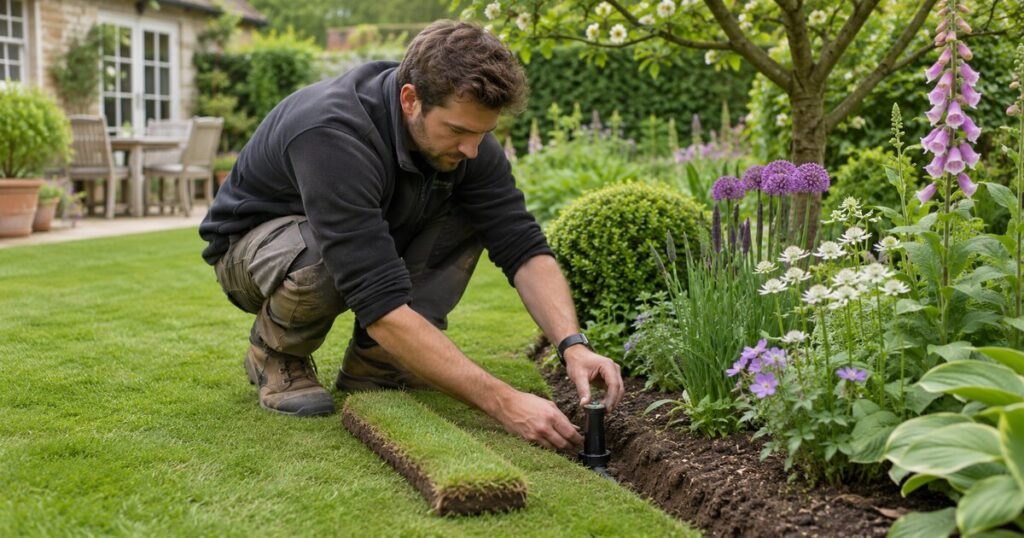
The work depends on the garden and the design. It may involve laying pipework on or below ground, fitting sprinklers or drip lines, connecting valves and setting up a controller. Some digging or temporary lifting of turf may be needed, particularly when adding a system to an established garden. The installer should explain the expected work and access arrangements beforehand.
If you are planning new paving, a lawn or planting, discuss irrigation early. Coordinating the work with landscaping can help avoid disturbing finished areas later. For any excavation, make sure known underground services are discussed.
| Stage | What you can expect |
| Survey | Garden needs and site conditions are discussed |
| Design and quote | The proposed layout and costs are prepared |
| Installation | Components and pipework are fitted |
| Commissioning | Zones are tested and adjusted |
| Handover | Controls and everyday operation are explained |
4. Testing, commissioning and handover
Before the work is complete, the installer should run the system and check that each zone operates as intended. This irrigation system commissioning can include checking for leaks, adjusting sprinkler direction and confirming that water reaches the intended areas without unnecessary overspray.
At handover, ask for a practical demonstration of the controller: how to change the schedule, pause watering and make seasonal adjustments. You should also know who to contact if you need help after installation.: further use can waste water or worsen a leak.
FAQ
How long does irrigation installation take?
It depends on the garden’s size, layout, ground conditions and system design. Ask your installer for a project-specific estimate.
Will installation damage my lawn or borders?
Some areas may need to be opened to lay pipework. The amount of disruption varies; discuss access and reinstatement with your installer before work begins.
What should I prepare before the survey?
Have any garden plans or landscaping drawings ready, and point out known underground services, water sources and areas with restricted access.
Plan your installation with confidence
A clear survey, tailored design and careful commissioning help you understand what is happening at each stage and how to use your new system afterwards. To discuss your garden and request a quote, book an irrigation survey.