Yes. Frost damage to irrigation systems can happen when water remains inside a pipe, valve or pump and freezes. As it expands, it can split a fitting or crack a component – sometimes leaving a leak that only becomes obvious when the system starts again in spring.
The risk is not the same throughout the garden. Buried pipework is usually better protected from cold than parts above ground, but shallow pipes and exposed equipment can still be vulnerable during a UK cold spell.
Which irrigation parts are most at risk?
| Component | Why frost can affect it |
| Exposed pipework and outdoor taps | Water can freeze quickly in pipes with little protection from soil or shelter. |
| Solenoid valves and valve boxes | Trapped water may expand inside valve components and damage their housings or seals. |
| Pop-up sprinklers | Trapped water may expand inside sprinkler components and damage their housings or seals. |
| Pumps, filters and booster sets | Water can remain in housings or filters even after the watering programme stops. |
| Buried irrigation pipes | Usually less exposed, but shallow runs or sections near the surface may still freeze. |
Buried pipes are not automatically frost-proof: their depth, location and whether water can drain away all matter. Can irrigation pipes freeze? Yes, especially if they are exposed, shallow or left full of standing water.
How to protect an irrigation system from frost
Autumn is the time to prepare, before a hard frost is forecast.
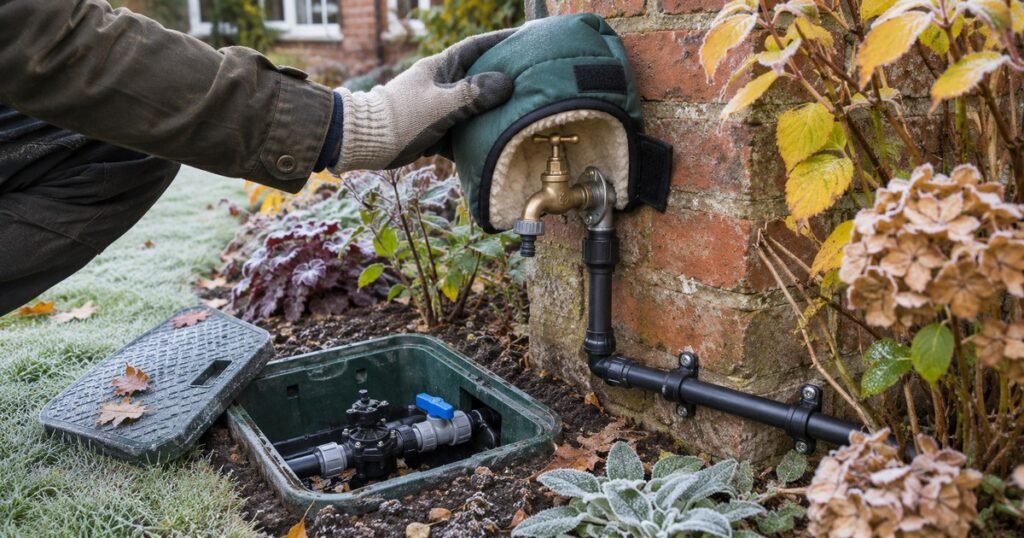
- Locate the main isolation point and identify exposed pipes, taps, valve boxes, filters and pumps.
- Remove hose timers and drain hoses; protect outdoor taps with a suitable cover (that’s your responsibility).
- Drain frost-sensitive equipment according to the system’s design. Switching off the controller alone does not remove water from pipes.
- Arrange professional winterisation where the system needs a controlled drain-down or pipework blow-out. Compressed air must be used at a pressure suited to the system.
A seasonal irrigation system maintenance visit can include autumn checks and winterisation. The Gardener’s Rain’s autumn service includes draining the system ahead of winter frosts.
Signs your system may need inspection
When the system restarts, look for a zone that will not run, weak or uneven sprinkler coverage, a sudden pressure change, or persistently wet ground around a pipe route or valve box. These may point to a leak or component damage. If you spot a problem, avoid repeatedly running the system: further use can waste water or worsen a leak.
FAQ
Is buried irrigation pipework safe from frost?
It is generally less exposed than above-ground pipework, but shallow sections or pipes with trapped water can still be at risk. The installation and site conditions matter.
Is turning off the irrigation controller enough?
No. Turning off the programme stops scheduled watering, but water may remain inside pipes, valves, filters or pumps.
When should I winterise my garden irrigation system?
Arrange autumn irrigation maintenance before freezing weather arrives. The right timing depends on local forecasts and the system’s equipment.
Prepare before the first hard frost
Draining vulnerable parts before winter can help prevent avoidable repairs and make spring recommissioning more straightforward. To book an irrigation maintenance visit or request a service visit, choose a suitable appointment.