How Often to Water New Turf
If you are wondering how often to water new turf, the short answer is: often at first, then gradually less frequently as roots establish. Fresh turf needs consistent moisture because it has been cut from its original growing site and must reconnect with the soil underneath. Extension guidance on turf establishment consistently stresses that newly laid turf needs immediate, regular watering, but not waterlogged conditions.
That said, there is no one-size-fits-all schedule. How often should you water new turf depends on the weather, your soil type, when the turf was laid, and whether you are watering by hose, sprinkler, or an automatic system. In the UK, mild spring conditions are very different from a hot, windy spell in July.
A helpful starting point is this:
- Days 1-7: water once or twice a day
- Days 8-14: water daily or every other day, depending on moisture levels
- Weeks 3-4: water 2-3 times per week, more deeply
- After rooting: transition to a normal deep, less frequent routine
The goal is to keep the turf and the top layer of soil moist while roots knit into the ground, then gradually encourage deeper rooting.
For tailored help with coverage, timing, or irrigation upgrades, see Irrigation Services or visit the Contact page.
A practical new turf watering schedule for the first 2-4 weeks
Week 1: keep it consistently moist
Water immediately after laying so moisture reaches the turf and the soil beneath it. During the first week, most new turf needs watering every morning, and in warmer, windy, or dry conditions it may also need a lighter second watering later in the day. The idea is even moisture, not puddles.
Week 2: start checking for rooting
Continue watering regularly, but begin checking whether the turf is starting to anchor. A gentle lift at the corner should show some resistance as roots develop. If it is still loose or drying quickly, keep watering daily. If it is taking well, you can begin spacing watering slightly further apart.
Weeks 3-4: water less often, but more deeply
Once the turf starts rooting, reduce frequency and increase depth. This helps roots grow down into the soil instead of staying shallow near the surface. By this stage, many lawns do well with 2-3 deeper waterings per week, adjusted for rainfall and temperature.
How long to water new turf
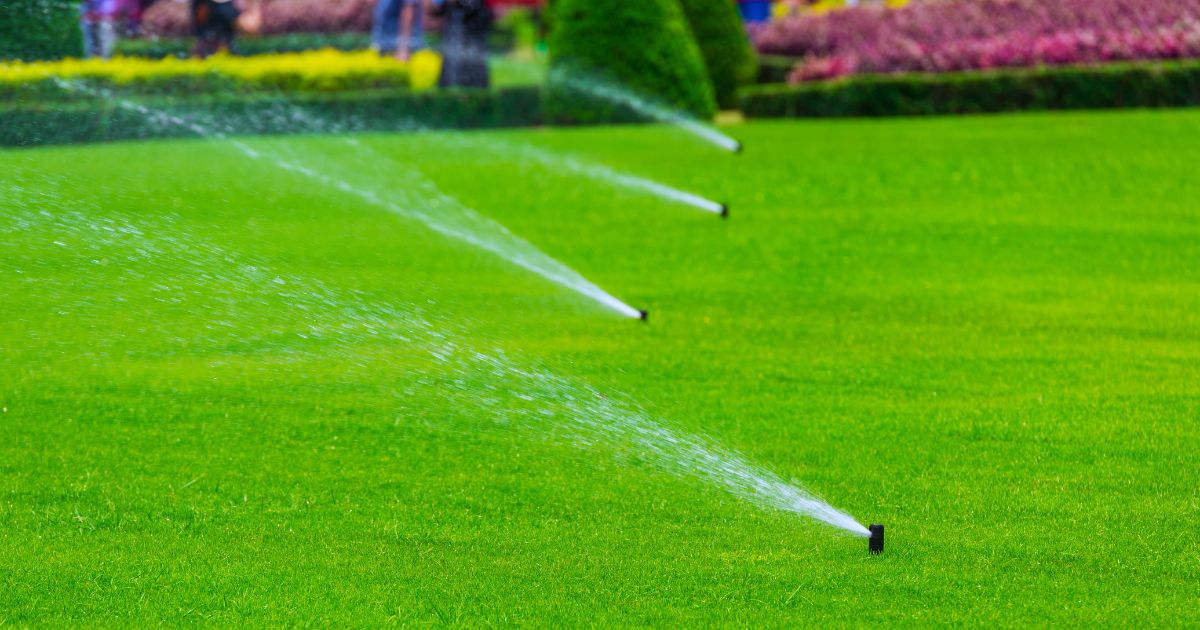
The answer to how long to water new turf depends less on minutes and more on how deeply the moisture is reaching. A short sprinkle is rarely enough. You want the turf itself and the soil below it to be moist, because roots need contact with damp soil to establish properly. Purdue and Oregon State guidance both emphasise soaking newly laid turf well and maintaining moisture without saturation.
As a rule of thumb:
- Light sandy soil: shorter but more frequent cycles
- Heavier clay soil: slower application, less often
- Cool, overcast weather: less watering
- Hot, windy weather: more frequent checks and possible top-up watering
If you have an automatic system, it is easier to split watering into shorter cycles to prevent runoff and improve absorption. That is especially useful on slopes or compacted ground. For homeowners considering a more reliable setup, Irrigation System Installation & Design can make establishment watering far more consistent.
Can you over water new turf?
Yes, can you over water new turf is an important question, because overwatering is one of the most common early mistakes. New turf needs frequent watering, but soggy conditions reduce oxygen in the soil, slow rooting, and can increase the risk of disease. Extension advice specifically warns against saturation and persistent waterlogging during establishment.
Signs of overwatering include:
- squelchy or soft ground underfoot
- standing water or runoff
- yellowing patches despite regular watering
- a musty smell or signs of fungal issues
- turf that stays loose because roots are not moving down into the soil
If this happens, reduce frequency, check drainage, and water only when the turf and soil begin to lose surface moisture.
What affects how often new turf should be watered?
Weather
Warm sun, drying wind, and low rainfall all increase water demand. Cool, damp weather lowers it.
Soil type
Sandy soils drain quickly and often need more frequent watering. Clay soils hold water longer, so they need more caution.
Time of year
Spring and autumn turfing is usually easier to manage than midsummer installation, when drying happens fast.
Irrigation method
A hose can work, but it is harder to apply water evenly. Sprinklers and automated systems usually provide more reliable coverage and better repeatability.
For a trusted external reference on lawn establishment and early care, Penn State Extension offers a useful guide here: Lawn Establishment.
Summary
The best answer to how often to water new turf is: water frequently at first, monitor conditions closely, and then reduce frequency as rooting improves. Most new turf needs daily attention in the first 1-2 weeks, followed by deeper, less frequent watering in weeks 3-4. Avoid both drying out and overwatering.
If you want a practical watering setup tailored to your garden, soil, and layout, get in touch via the Contact page or explore Irrigation Services for personalised advice and irrigation surveys.